
Yash Pataskar
TL;DR
If you’re looking for employee engagement activities that employees actually enjoy rather than politely tolerate, you’ve come to the right place.
This guide explores 52 proven employee engagement ideas, organised by objective, audience size, budget, and event type. Whether you’re planning an annual day, leadership summit, product launch, conference, or employee appreciation event, these ideas will help you create stronger teams, higher participation, and unforgettable experiences.
You’ll also learn:
- Why most employee engagement activities fail
- The psychology behind successful engagement
- Activities for every budget
- Activities for small and large teams
- Common mistakes to avoid
- How interactive entertainment transforms corporate events
Estimated Reading Time: 10–12 minutes
Employee Engagement Activities Are No Longer Optional
Employee engagement activities have evolved from being “nice-to-have” additions to becoming an essential part of modern workplace culture.
Today’s employees don’t just evaluate salaries. They evaluate experiences. They remember whether they felt heard. Whether they laughed. Whether they connected with colleagues.
Whether a company invested in creating moments worth remembering.
In a world where hybrid work, digital fatigue, and shrinking attention spans have become everyday realities, organisations face a challenge previous generations never imagined.
How do you genuinely bring people together?
The answer isn’t another 83-slide presentation.
Nor is it another motivational quote printed on a coffee mug.
Great employee engagement ideas create shared experiences. Experiences become stories. Stories become culture. And culture becomes one of the strongest competitive advantages a company can build.
According to research published by Gallup, highly engaged employees are more productive, more innovative, and significantly more likely to stay with their organisation. Companies that actively invest in engagement also tend to experience stronger customer satisfaction and better overall business performance.
Yet despite this, many organisations still approach engagement with the enthusiasm of someone reluctantly attending a Monday morning compliance meeting.
The result?
- Employees politely clap.
- Smile for the group photograph.
- Collect their snack box.
- Then immediately forget the event ever happened.
The problem isn’t that employee engagement doesn’t work. The problem is that generic engagement rarely works.
That’s exactly why this guide exists.
Instead of giving you another predictable list of “play two truths and a lie” or “organise a treasure hunt,” we’re going deeper.
We’ll explore activities that build trust.
Activities that encourage collaboration.
Activities that spark creativity.
Activities that improve communication.
Activities that make employees look up from their phones and actually enjoy being in the room.
Most importantly, we’ll explain why each activity works, so you can choose the right one for your audience instead of blindly copying a list from the internet.
Because great corporate events aren’t measured by how busy the agenda looked.
They’re measured by how people felt when they walked out.
Looking for experiences that combine psychology, audience participation, and unforgettable moments? Explore our guide to Corporate Mentalist in India to see why interactive entertainment has become one of the fastest-growing trends in corporate events.
What Are Employee Engagement Activities?
Before diving into the list, let’s answer a simple question.
What exactly are employee engagement activities?
Employee engagement activities are structured experiences designed to improve workplace relationships, communication, collaboration, motivation, and overall job satisfaction.
Unlike routine meetings or mandatory training sessions, these activities encourage employees to participate actively rather than passively consume information.
The best engagement activities achieve several goals simultaneously:
- Break down communication barriers
- Strengthen trust between colleagues
- Improve collaboration across departments
- Reduce workplace stress
- Celebrate achievements
- Encourage creativity
- Reinforce organisational culture
Some activities last ten minutes. Others span an entire day.
Some require almost no budget. Others become the highlight of an annual conference.
The common thread isn’t time or cost. It’s connection.
Why Employee Engagement Activities Matter More Than Ever
Imagine two companies.
Company A organises an annual conference filled with motivational talks, next year’s projection presentations & cliche awards.
Employees attend because attendance is mandatory.
They politely listen.
Check Instagram.
Respond to pep emails.
Wait for dinner and drinks.
Go home.
Company B hosts an event where employees solve challenges together, celebrate wins, laugh during interactive sessions, participate in live experiences, and leave with stories they’ll tell for months.
Which company builds stronger culture?
The answer is obvious.
Humans remember experiences far more vividly than schedules.
Modern workplaces need moments that create:
- emotional connection
- psychological safety
- shared achievement
- genuine conversation
Research from Harvard Business Review has repeatedly highlighted the importance of recognition, belonging, and meaningful work in improving employee engagement and organisational performance.
Engagement isn’t about entertaining employees. It’s about helping people feel connected to one another and to the organisation’s purpose.
Why Most Employee Engagement Activities Fail
This is where most articles stop.
We’re just getting started.
The uncomfortable truth is that many employee engagement activities fail long before the event begins.
Not because employees don’t want to participate.
But because the activity was never designed with people in mind.
Common reasons include:
❌ Participation is forced.
Nothing kills enthusiasm faster than mandatory fun.
❌ Activities have no purpose.
If employees can’t understand why they’re doing something, they’ll quickly disengage.
❌ Everyone receives the same experience.
An activity for 20 people won’t necessarily work for 2,000.
❌ Introverts are ignored.
Great engagement creates multiple ways to participate.
Not everyone enjoys standing on stage.
❌ The event is entirely passive.
The human brain isn’t designed to sit still and consume information for eight hours.
Participation creates memory. Observation creates fatigue.
Part 1 begins with the foundations of employee engagement…
Category 1: Icebreaker Employee Engagement Activities
The first few minutes of any corporate event are often the quietest.
People arrive in small groups, speak only to colleagues they already know, and cautiously glance around the room while pretending to check emails.
A good icebreaker changes that.
The best employee engagement activities don’t force conversation. They simply create opportunities for it.
These activities are ideal for:
- Annual meetings
- Conferences
- Town halls
- New employee onboarding
- Leadership summits
- Off-site retreats
Activity 1: Human Bingo
🎯 Objective: Help employees meet new people quickly.
👥 Best For: 30–300 participants
⏱ Time: 20–30 minutes
💰 Budget: Low
How It Works-
Each participant receives a bingo card filled with statements such as:
Has worked here for more than five years
Speaks three languages
Has run a marathon
Plays a musical instrument
Has travelled to more than ten countries
Employees walk around the room trying to find colleagues who match each statement.
The first person to complete a row or the full card wins.
🧠 Why It Works
People naturally enjoy discovering surprising similarities.
Instead of awkward introductions, conversations begin with curiosity.
The activity also encourages employees to interact outside their immediate teams, making it one of the simplest yet most effective employee engagement ideas for large organisations.
⭐ Pro Tip
Avoid work-related questions.
Personal stories create stronger human connections.
⚠ Common Mistake
Giving everyone identical cards.
Randomised cards keep conversations flowing.
Activity 2: Speed Networking
🎯 Objective: Break departmental silos.
👥 Best For: 20–200 people
⏱ Time: 30–45 minutes
💰 Budget: Low
How It Works-
Arrange participants in two circles facing each other.
Each pair has three minutes to answer one interesting question before rotating.
Questions might include:
- What’s one skill you’d love to learn?
- What’s the best career advice you’ve ever received?
- Which project made you proudest?
After three minutes, everyone rotates to meet someone new.
🧠 Why It Works
Psychologists have long observed that repeated brief interactions can reduce social barriers and build familiarity.
Instead of spending an evening speaking only with familiar colleagues, employees leave having met ten or fifteen new people.
This is particularly effective during conferences and leadership events where networking is a primary objective.
⭐ Pro Tip
Avoid generic questions such as: “What do you do?”
Instead ask questions that reveal personality.
Activity 3: Two Truths and One Lie (With a Twist)
Yes… It’s an old favourite. But most companies do it badly.
Instead of asking employees to invent random facts, ask them to share experiences related to work.
Examples:
- I accidentally sent an email to the CEO.
- I’ve worked in three different countries.
- I’ve never missed a project deadline.
The room becomes filled with laughter and storytelling rather than awkward guessing.
🎯 Objective: Encourage storytelling.
👥 Best For: Small to medium groups.
🧠 Why It Works
Stories are remembered far longer than introductions.
The activity also humanises colleagues, making future collaboration feel more natural.
Activity 4: Find Someone Who…
This is a faster variation of Human Bingo.
Participants receive a checklist such as:
Find someone who:
- joined this year
- loves trekking
- owns a pet
- can solve a Rubik’s Cube
- has visited five countries
The first person to complete the sheet wins.
Why It Works
People move around the room continuously. Movement itself increases energy levels while reducing social hesitation.
Activity 5: Desk Show-and-Tell
Ask employees to bring an object that represents something meaningful to them.
Examples include:
- a travel souvenir
- an old notebook
- a sports medal
- a family recipe
- a childhood photograph
Each person shares the story behind the object.
Why It Works
Humans connect through stories. Not job titles.
Interesting Blog
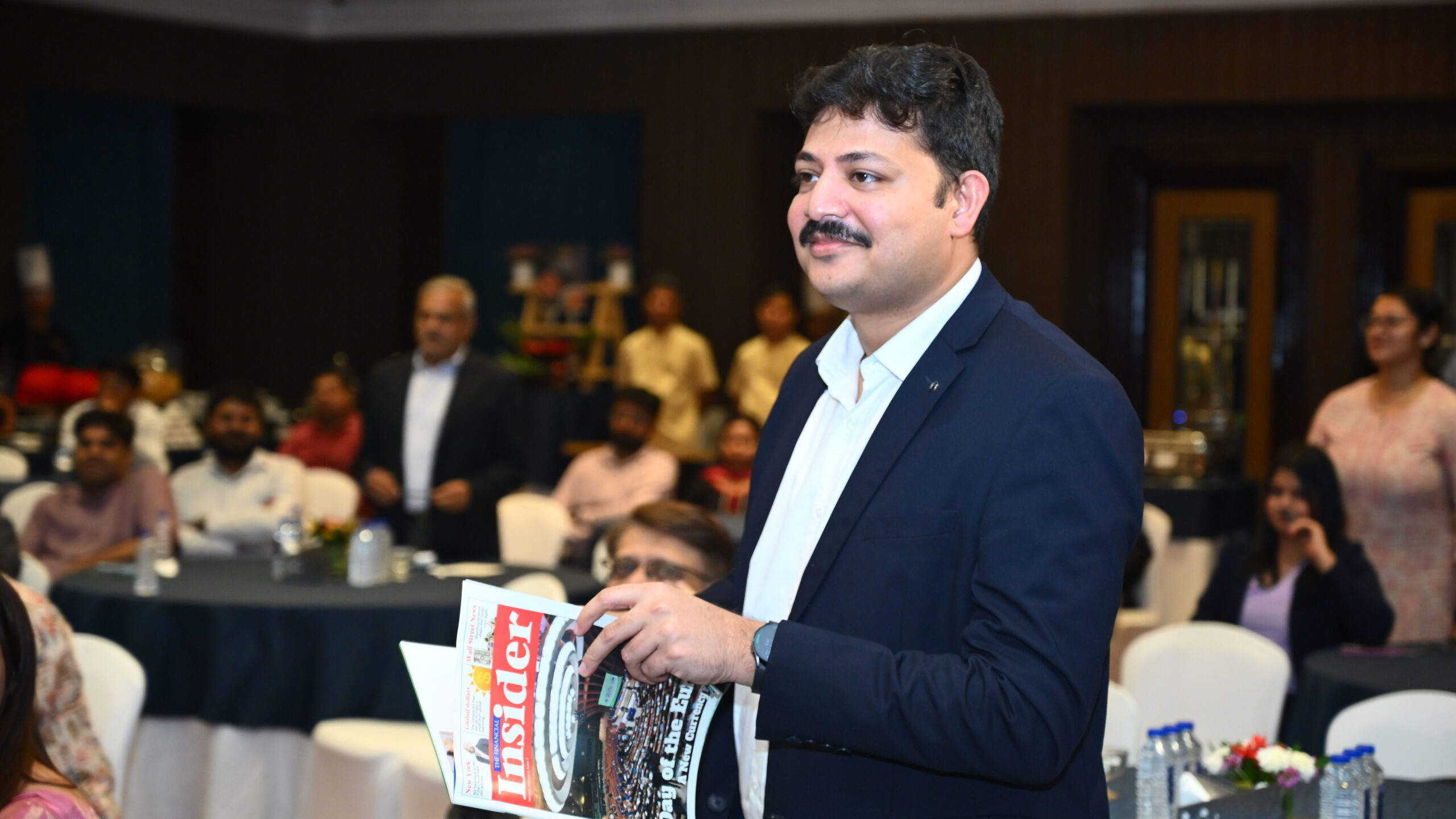
If psychology and human connection excite you, you might be inspired to read – The Psychology Behind Mentalism.
Activity 6: Mystery Partner Challenge
As employees arrive, each receives half of a famous quote, movie title, company value, or puzzle.
Their task is to find the person holding the matching half.
Once paired, they complete a small challenge together.
Why It Works
People remember people they solve problems with. The activity also creates immediate collaboration between strangers.
Activity 7: The One-Minute Story
Ask each table to answer one unusual prompt.
Examples:
- Tell us about the most unexpected thing that happened during your career.
- What’s a skill people don’t know you have?
- Which decision changed your life?
Every person gets one minute.
Why It Works
Short stories create emotional connection without placing too much pressure on introverted participants.
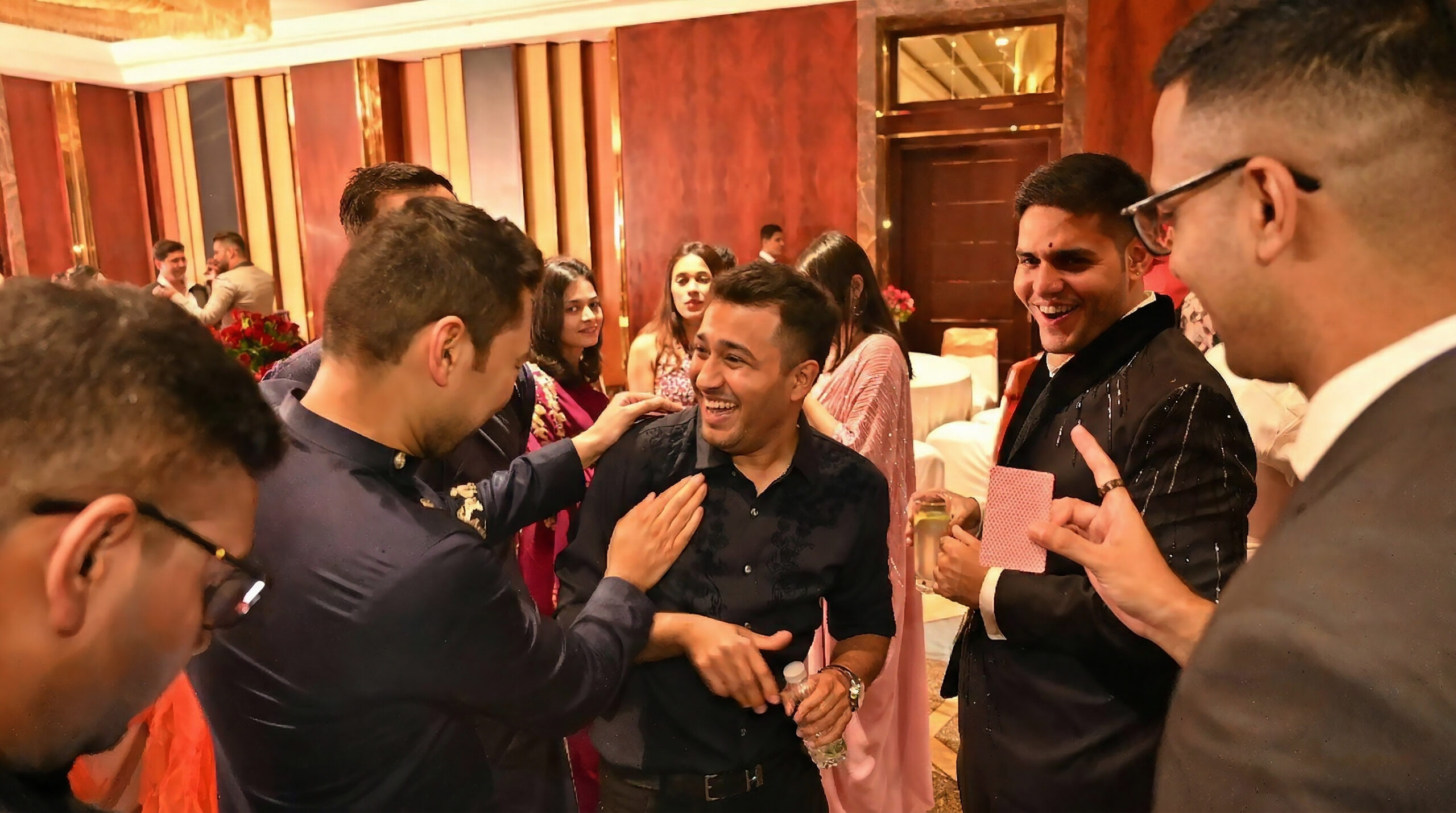
Activity 8: Interactive Mentalism Experience
🎯 Objective: Create shared wonder while encouraging participation.
👥 Best For: 50–2,000+ participants
⏱ Time: 20–60 minutes
💰 Budget: Medium to Premium
Unlike traditional entertainment, interactive mentalism transforms the audience into participants.
Employees don’t simply watch.
They become part of the experience.
A thought is revealed.
A prediction comes true.
An impossible coincidence unfolds.
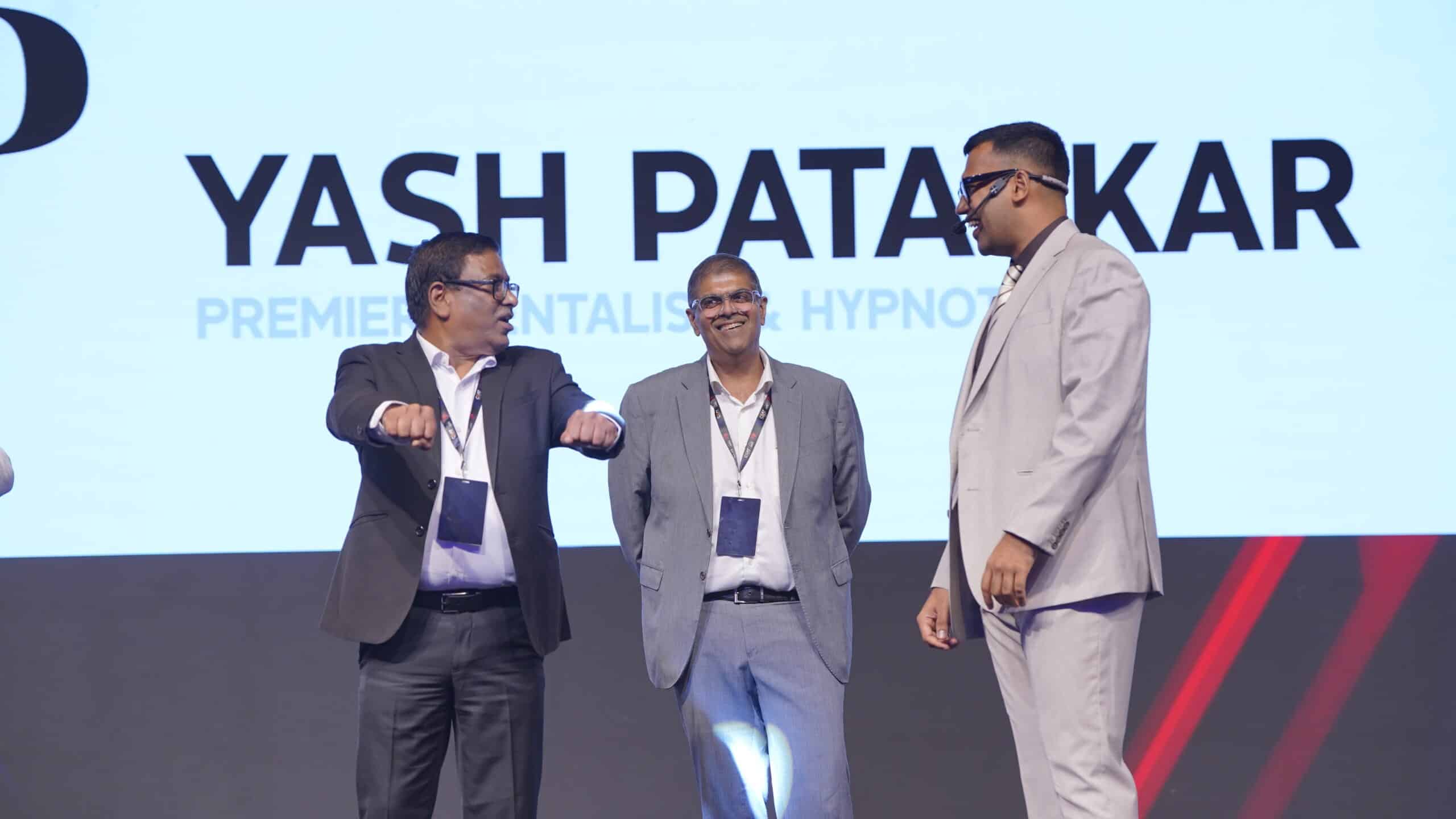
Somebody is hypnotized!
Within minutes, entire troops of strangers begin discussing what they’ve just witnessed.
That’s exactly why interactive experiences consistently outperform passive entertainment when it comes to creating memorable corporate events.
Rather than dividing employees into teams, mentalism unites the entire room through a shared sense of curiosity and amazement.
For organisations looking for employee engagement activities that genuinely leave a lasting impression, professionally delivered interactive entertainment can become the emotional highlight of the event.
🧠 Why It Works
Psychological research consistently shows that surprise, curiosity, and emotional arousal improve memory formation.
People may forget the agenda.
They rarely forget the moment something impossible happened three feet away.
⭐ Pro Tip
Position interactive entertainment after lunch or before the keynote speaker. It immediately resets the room’s energy and attention.
If you’re exploring corporate entertainment ideas that combine psychology, audience participation, and storytelling, our guide on Corporate Mentalist in India explains why interactive mentalism has become one of the fastest-growing choices for conferences, annual meetings, and leadership events.
| Activity | Group Size | Time | Energy Level |
|---|---|---|---|
| Human Bingo | 30-300 | 30 minutes | ⭐⭐⭐⭐ |
| Speed Networking | 20-200 | 45 minutes | ⭐⭐⭐⭐⭐ |
| 2 Truths & 1 Lie | 10-80 | 20 minutes | ⭐⭐⭐ |
| Find someone who | 20-250 | 20 minutes | ⭐⭐⭐⭐ |
| Desk show-and-tell | 10-40 | 30 minutes | ⭐⭐ |
| Mystery Partner | 20-150 | 25 minutes | ⭐⭐⭐⭐ |
| 1 Minute Story | 10-30 | 30 minutes | ⭐⭐⭐ |
| Mentalism Experience | 50-2000+ | 20 – 60 minutes | ⭐⭐⭐⭐⭐ |
Category 2: Team Building Employee Engagement Activities
Icebreakers help people meet. Team building activities help people trust.
There’s an important difference.
Trust isn’t built by asking everyone to fall backwards into a colleague’s arms.
(Please don’t.)
Trust grows when people solve problems together, communicate under pressure, celebrate small victories, and realise that every teammate brings something different to the table.
The following employee engagement activities are designed to strengthen collaboration while keeping the experience enjoyable.
Activity 9: Escape Room Challenge
🎯 Objective: Improve communication and collaborative problem-solving.
👥 Best For: 6 to 100 participants (multiple teams)
⏱ Time: 45 to 90 minutes
💰 Budget: ₹₹₹
How It Works
Teams solve puzzles, uncover clues, and complete challenges before time runs out.
This can be:
- A physical escape room
- A conference-room version
- A custom company-themed challenge
- A virtual escape room for remote teams
🧠 Why It Works
Escape rooms reveal something fascinating. Titles disappear.
Managers and interns suddenly become teammates.
Everyone contributes differently.
Some notice details.
Others solve patterns.
Others keep everyone calm.
That’s exactly how effective workplaces function.
⭐ Pro Tip
Create puzzles related to your company’s products, values, or industry.
The experience instantly becomes more meaningful.
Activity 10: Build the Tallest Tower
🎯 Objective: Encourage creativity under constraints.
👥 Best For: 15 to 300 people
⏱ Time: 20 to 40 minutes
💰 Budget: ₹
Materials:
Paper
Tape
Straws
Spaghetti
Marshmallows
How It Works-
Each team receives identical materials.
Their mission:
Build the tallest free-standing structure within the time limit.
🧠 Why It Works
People naturally experiment.
They fail.
Adapt.
Communicate.
Laugh.
Then try again.
In other words… Innovation.
⚠ Mistake to Avoid
Don’t announce prizes immediately.
Allow people to focus on solving the challenge rather than winning.
Activity 11: The Marshmallow Challenge
One of the most famous team engagement activities in the world.
The goal:
Build the tallest structure using:
- spaghetti
- tape
- string
- one marshmallow
The marshmallow must remain on top.
🧠 Why It Works
This challenge teaches rapid prototyping.
Teams that build, test, fail, and rebuild usually outperform teams that spend twenty minutes discussing perfect plans.
It’s a brilliant metaphor for business.
Activity 12: Blindfold Navigation
🎯 Objective: Improve trust and communication.
👥 Best For: 10 to 60 participants
⏱ Time: 30 minutes
💰 Budget: ₹
How It Works
One employee wears a blindfold.
Another guides them through a simple obstacle course using verbal instructions only.
🧠 Why It Works
Communication suddenly becomes intentional.
People quickly realise how often assumptions create misunderstandings.
The activity also generates plenty of laughter.
Pro Tip
Keep obstacles simple.
This is about communication.
Not creating the next Olympic event.
Activity 13: LEGO® Innovation Workshop
🎯 Objective: Creative thinking
👥 Best For: 10 to 100 participants
⏱ Time: 45 to 90 minutes
💰 Budget: ₹₹
How It Works
Teams use LEGO bricks to represent:
- company vision
- future products
- workplace culture
- customer journeys
Each model becomes the starting point for discussion.
🧠 Why It Works
Building with your hands activates different thinking patterns than talking alone.
People who rarely speak during meetings often contribute significantly during creative exercises.
Activity 14: Build a Brand
🎯 Objective: Innovation and strategic thinking.
👥 Best For: 20 to 200 people
How It Works
Each team receives an imaginary product.
Within one hour they create:
- Brand name
- Logo
- Tagline
- Advertisement
- Elevator pitch
Then present it Shark Tank style.
🧠 Why It Works
This combines:
- creativity
- teamwork
- communication
- leadership
- presentation skills
It’s particularly effective during marketing and sales conferences.
Activity 15: Office Olympics
Who says the Olympics require stadiums?
Create mini-events such as:
- Paper plane distance
- Chair relay
- Desk basketball
- Sticky note race
- Balloon volleyball
Award medals.
Play an opening ceremony soundtrack.
Celebrate dramatically.
Nobody has ever complained about excessive fun at Office Olympics.
(Well… almost nobody.)
🧠 Why It Works
Micro-competitions trigger dopamine, increase participation, and encourage interaction across departments.
The key is keeping the tone playful rather than intensely competitive.
Activity 16: Puzzle Exchange
🎯 Objective: Cross-functional collaboration.
Each department receives only part of a large puzzle.
To complete it, teams must communicate with other departments.
Exactly like real business.
Only with fewer emails.
Why It Works
Employees quickly understand that success depends on collaboration rather than individual performance.
Activity 17: Build Something for Charity
Instead of competing against one another… Build something together.
Ideas:
- Assemble bicycles for children
- Pack school kits
- Create hygiene kits
- Plant trees
- Build birdhouses
- Prepare care packages
🧠 Why It Works
Research consistently shows that shared purpose strengthens emotional connection.
Employees leave feeling they’ve contributed to something meaningful.
Purpose is one of the strongest drivers of long-term engagement.
Activity 18: The Silent Line-Up
🎯 Objective: Improve non-verbal communication.
Without speaking, participants must line up according to:
- Birth month
- Years at the company
- Shoe size (surprisingly entertaining!)
- Distance travelled to work
- Alphabetical order of first names
🧠 Why It Works
People become remarkably creative when words disappear.
The room quickly fills with gestures, laughter, and improvised communication.
It’s also wonderfully inclusive.
Activity 19: The Innovation Auction
Every team receives fictional currency.
Ideas are “auctioned.”
Teams bid on the ideas they believe would generate the greatest business impact.
Examples:
- Four-day work week
- AI assistant
- Wellness programme
- Unlimited learning budget
- Community volunteering initiative
After the auction, each team explains why they invested.
Why It Works
Decision-making becomes visible.
People learn to justify priorities rather than simply voting.
Activity 20: Corporate Amazing Race
One of the highest-energy employee engagement activities for large organisations.
Teams travel between stations solving:
- logic puzzles
- physical challenges
- creative tasks
- company trivia
- photo missions
Each completed challenge unlocks the next.
🎯 Best For: 50 to 1,000+ employees
⏱ Time: 90 minutes to half a day
💰 Budget: ₹₹₹
🧠 Why It Works
It combines nearly every ingredient of exceptional engagement:
- movement
- teamwork
- competition
- storytelling
- problem-solving
- shared success
Employees rarely remember every checkpoint. They remember the conversations that happened between them. And that’s the real objective.

Great Team Building Doesn’t Feel Like Team Building
The strongest employee engagement activities rarely announce themselves as “team-building exercises.”
Instead, they disguise collaboration inside enjoyable experiences.
People don’t bond because someone tells them to.
They bond because they solve problems together, laugh together, and celebrate success together.
That’s why the best corporate events don’t force interaction.
They make interaction inevitable.
End of Part 1
What’s Next?
Now that your team knows one another and trusts one another…
How do you keep them inspired?
In Part 2, we’ll explore creativity, recognition, wellness, and purpose-driven employee engagement activities that strengthen workplace culture long after the event ends.
Conclusion
The best employee engagement activities aren’t necessarily the loudest, the most expensive, or the most elaborate.
They’re the ones that encourage people to participate, collaborate, and leave with stories worth telling.
Whether it’s a quick Human Bingo session before a conference, a creative team-building challenge, or an interactive experience that has an entire room questioning reality, great engagement is built on one simple principle:
People remember experiences, not agendas.
Unfortunately, this is also where many organisations stop.
They focus on breaking the ice…
…but forget how to sustain momentum throughout the rest of the event.
Keeping employees engaged for an entire conference, annual day, leadership summit, or off-site requires a different approach altogether.
That’s exactly what we’ll explore next.
Continue Reading
👉 Part 2: Creative, Learning & Recognition Employee Engagement Activities
In the next part of this guide, we’ll explore employee engagement activities that go beyond traditional team building.
You’ll discover:
🎨 Creative activities that unlock innovation
🧠 Learning experiences employees genuinely enjoy
🏆 Recognition ideas that boost morale
🌱 Wellness initiatives that reduce burnout
❤️ CSR activities that strengthen company culture
💡 Psychology-backed engagement techniques that create lasting impact
➡ Continue to Part 2: Creative, Learning & Recognition Employee Engagement Activities
[…] Part 1: 52 Employee Engagement Activities […]