
Yash Pataskar
TL;DR
Creativity fuels innovation.
Recognition fuels motivation.
Purpose fuels loyalty.
In this part of our guide to employee engagement activities, you’ll discover practical ideas that help employees think differently, celebrate achievements, improve wellbeing, and build a stronger workplace culture.
Employee Engagement Activities Should Do More Than Fill Time
The most successful employee engagement activities don’t simply entertain people.
They change how people feel about coming to work.
A great activity creates conversation.
An exceptional activity creates belonging.
Think back to the best workplace event you’ve attended.
You probably don’t remember every speech.
You probably don’t remember the exact lunch menu.
But chances are you remember:
- someone recognising your contribution
- laughing with colleagues
- solving an unexpected challenge
- hearing a story that stayed with you
- feeling genuinely appreciated
That’s because engagement isn’t measured by attendance.
It’s measured by emotion.
When employees feel valued, trusted, and connected, they’re more likely to collaborate, innovate, and stay committed to the organisation.
This section explores employee engagement ideas that strengthen workplace culture long after the event has ended.
Category 3: Creative Employee Engagement Activities
Creativity isn’t reserved for designers, marketers, or artists.
Every organisation benefits when employees are encouraged to think differently.
Creative employee engagement activities provide a safe environment for experimentation, collaboration, and fresh ideas without the pressure of everyday deadlines.
Activity 21: Reverse Brainstorming
🎯 Objective: Improve problem-solving.
👥 Best For: 10 to 80 employees
⏱ Time: 30 to 45 minutes
💰 Budget: ₹
How It Works
Instead of asking: “How do we improve customer service?”
Ask: “How could we create the worst customer service imaginable?”
Teams generate hilariously terrible ideas.
Then they reverse every answer into practical improvements.
🧠 Why It Works
Our brains often identify problems more easily than solutions.
Reverse thinking unlocks creativity while reducing the pressure to produce “perfect” ideas.
It also generates plenty of laughter.
Activity 22: Build the Future Workplace
Teams imagine the company five years from now.
Using chart paper, LEGO®, sketches or digital tools, they design:
- office layouts
- technology
- culture
- customer experience
- employee benefits
Each team presents its vision.
🧠 Why It Works
Employees begin thinking like owners rather than spectators.
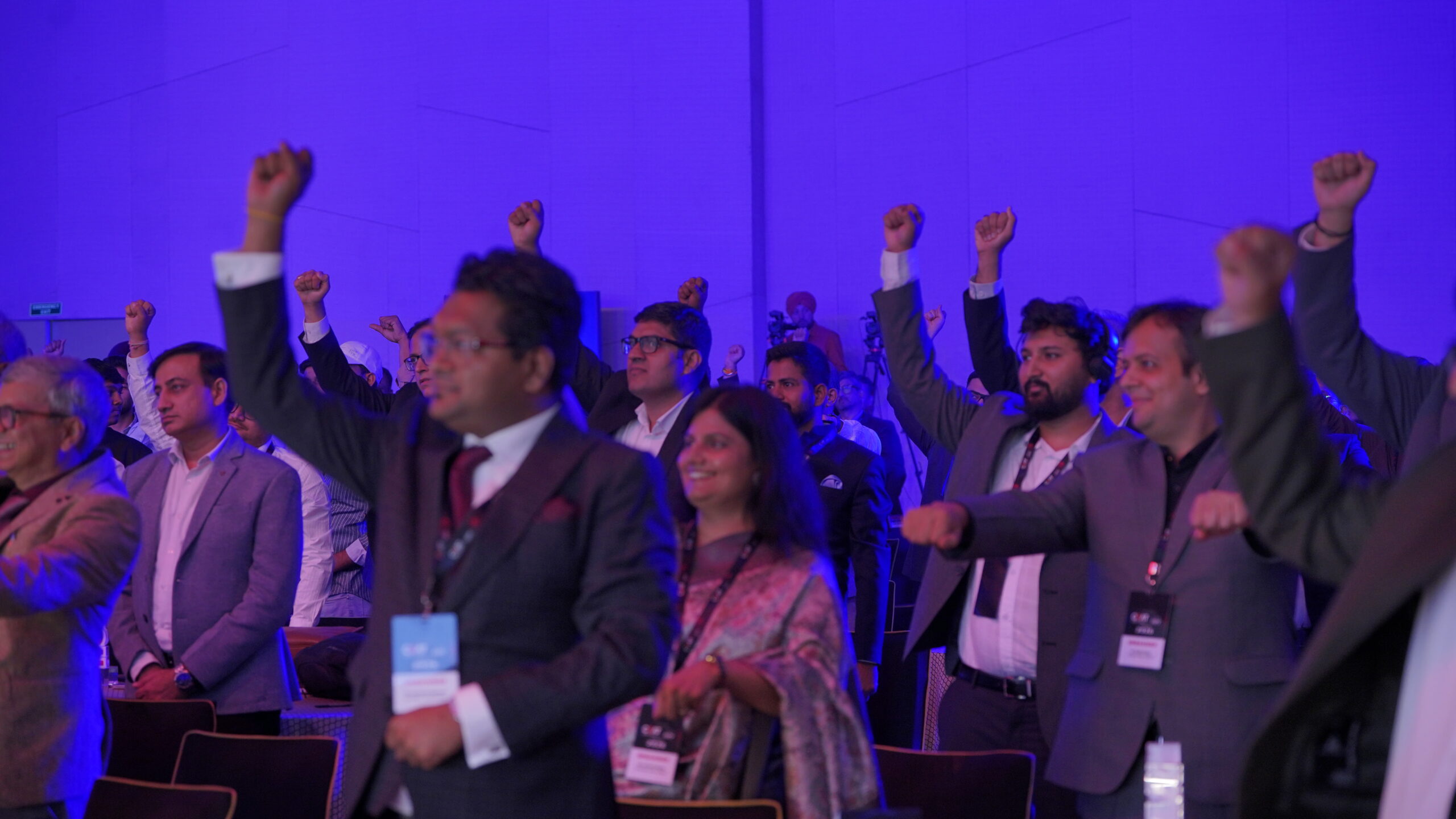
Activity 23: The Impossible Product Challenge
Every team receives three random objects.
Examples:
- umbrella
- coffee mug
- bicycle
Their challenge?
Create a revolutionary product using all three.
Then pitch it Shark Tank style.
Activity 24: Department Swap Challenge
Employees spend one hour learning another department’s responsibilities.
Sales learns Finance.
Marketing learns Operations.
HR learns Customer Support.
🧠 Why It Works
Empathy increases dramatically once people experience another team’s daily challenges.
Cross-functional understanding also improves collaboration.
Activity 25: Silent Brainstorming
Instead of loud discussions, everyone writes ideas individually for ten minutes.
Only then does the group begin talking.
Why It Works
Research shows quieter participants often contribute more original ideas when given time to think independently.
The loudest voice isn’t always the best idea.
Activity 26: Innovation Wall
Throughout the event, employees post anonymous suggestions answering prompts like:
What should we stop doing?
What should we start doing?
What makes you proud to work here?
What frustrates you most?
Review them together later.
Pro Tip
Respond to the ideas after the event.
Otherwise employees assume nobody was listening.
Category 4: Employee Recognition Activities
Recognition is one of the most overlooked employee engagement activities.
People rarely leave companies because someone thanked them too often.
Recognition doesn’t need to be expensive. It needs to be genuine.
According to Gallup, employees who receive meaningful recognition are more likely to be engaged, productive, and committed to their organisation.
Activity 27: Peer Appreciation Wall
Employees write anonymous appreciation notes to colleagues.
At the end of the event, everyone collects their messages.
Why It Works
Recognition from peers often feels even more meaningful than recognition from management.
Activity 28: Hidden Heroes Awards
Celebrate contributions that often go unnoticed.
Examples:
- Always Helpful
- Problem Solver
- Calm Under Pressure
- Customer Champion
- Team Spirit Award
Funny Tip
Avoid awards like:
Most Emails Sent Before 7 AM
Unless you’re also giving therapy vouchers.
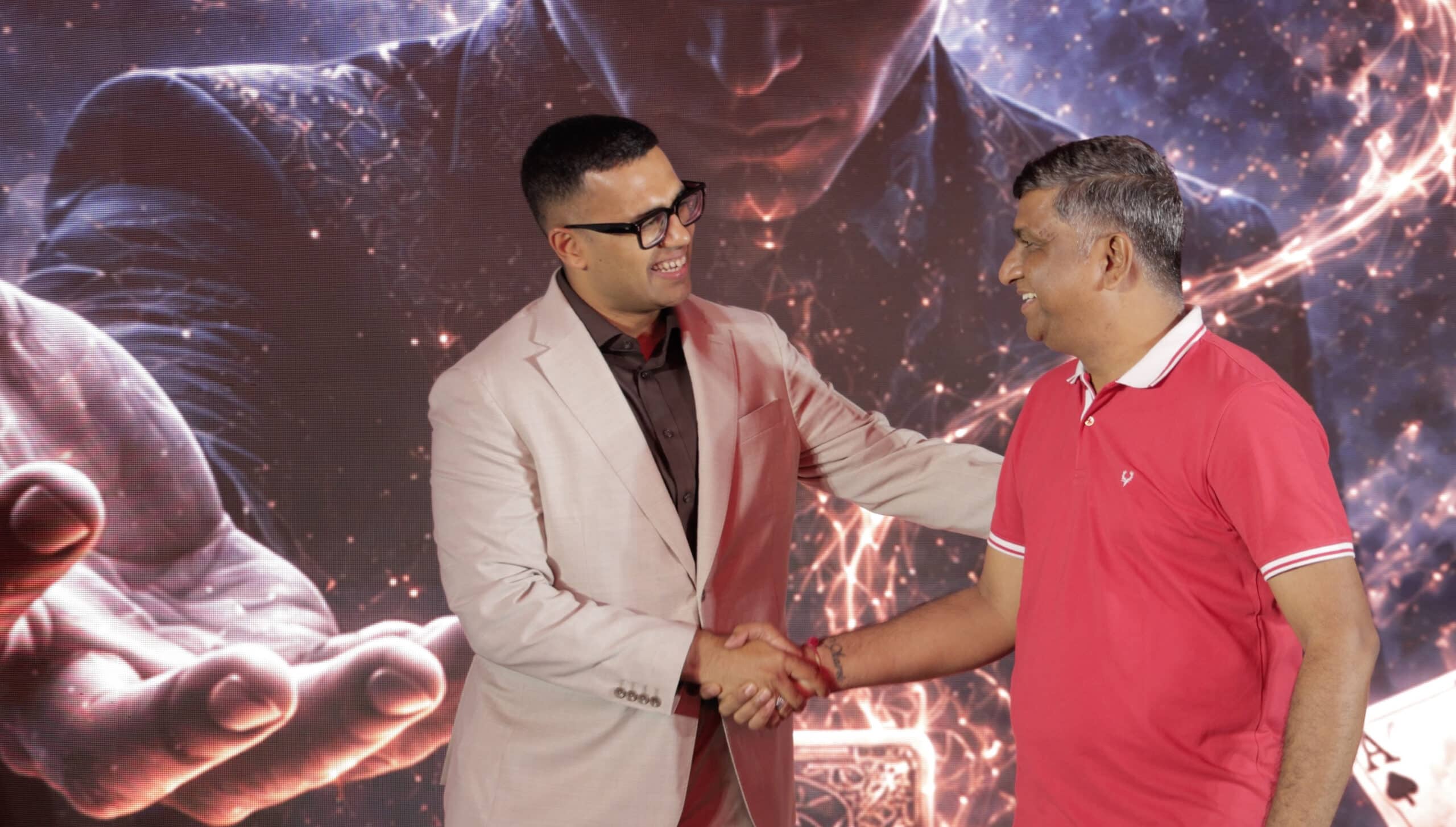
Activity 29: Gratitude Circle
Employees stand in small circles. Each person thanks another colleague for something specific.
Specificity matters.
Instead of: “Thanks for everything.”
Try: “Thank you for staying late to help us finish the client presentation.”
Activity 30: CEO Thank-You Letters
Instead of a generic speech, senior leaders write short handwritten notes to employees.
Simple.
Personal.
Unexpected.
Why It Works
People rarely forget genuine appreciation from leadership.
Activity 31: Appreciation Lottery
Every participant secretly draws a colleague’s name.
Throughout the day they look for opportunities to encourage or support that person.
At the end, everyone reveals who they had.
Why It Works
People actively search for positive behaviours instead of faults.
That’s a surprisingly powerful shift.
Activity 32: Celebration Timeline
Create a giant timeline of company achievements.
Invite employees to add:
- promotions
- memorable projects
- funny moments
- client wins
- milestones
Why It Works
Shared history strengthens organisational identity.
Culture isn't built
DURING STRATEGY MEETINGSIt's built through thousands of moments
WHERE PEOPLE FEEL SEEN, VALUED, AND APPRECIATED.
Category 5: Wellness Employee Engagement Activities
For years, workplace wellness meant little more than a fruit basket in the pantry and a motivational poster reminding everyone to “Stay Positive.”
Fortunately, organisations have evolved.
Today’s leaders understand that employee engagement activities aren’t only about productivity.
They’re about people.
Employees who feel physically healthy, mentally supported, and emotionally connected tend to collaborate better, communicate more effectively, and contribute with greater enthusiasm.
Wellness isn’t simply an HR initiative. It’s a business strategy.
According to research published by Gallup and Harvard Business Review, organisations that actively support employee wellbeing often experience stronger engagement, reduced burnout, improved retention, and higher overall performance.
The good news?
Not every wellness initiative requires a huge budget.
Sometimes the simplest employee engagement ideas have the greatest impact.
Activity 33: Walking Meetings
🎯 Objective: Encourage movement while improving conversation.
👥 Best For: 2 to 8 participants
⏱ Time Required: 20 to 45 minutes
💰 Budget: ₹
How It Works
Instead of gathering around another conference table, take the discussion outdoors.
Whether it’s around your office campus, a nearby park, or even inside the building, walking meetings naturally create a more relaxed environment.
Topics particularly suited to walking meetings include:
- brainstorming
- project planning
- one-to-one conversations
- career development
- mentoring
🧠 Why It Works
Movement stimulates creativity.
Walking also reduces the formal hierarchy often created by sitting across a desk.
People tend to speak more openly when they’re walking side by side rather than face to face.
⭐ Expert Tip
Avoid discussing highly confidential or complex financial information while strolling through a public park.
The squirrels may become unusually well informed.
Activity 34: Digital Detox Hour
🎯 Objective: Encourage genuine human interaction.
👥 Best For: 10 to 500 employees
⏱ Time Required: 45 to 60 minutes
💰 Budget: ₹
How It Works
For one hour:
- phones stay away
- laptops remain closed
- notifications disappear
Instead, employees participate in conversations, games, workshops, or collaborative activities.
🧠 Why It Works
Modern workplaces are constantly competing for attention.
Removing digital distractions allows employees to become fully present.
Ironically, people often discover they don’t miss their phones nearly as much as they expected.
Activity 35: Laughter Workshop
🎯 Objective: Reduce stress while boosting energy.
👥 Best For: 20 to 300 employees
⏱ Time Required: 30 to 45 minutes
💰 Budget: ₹₹
How It Works
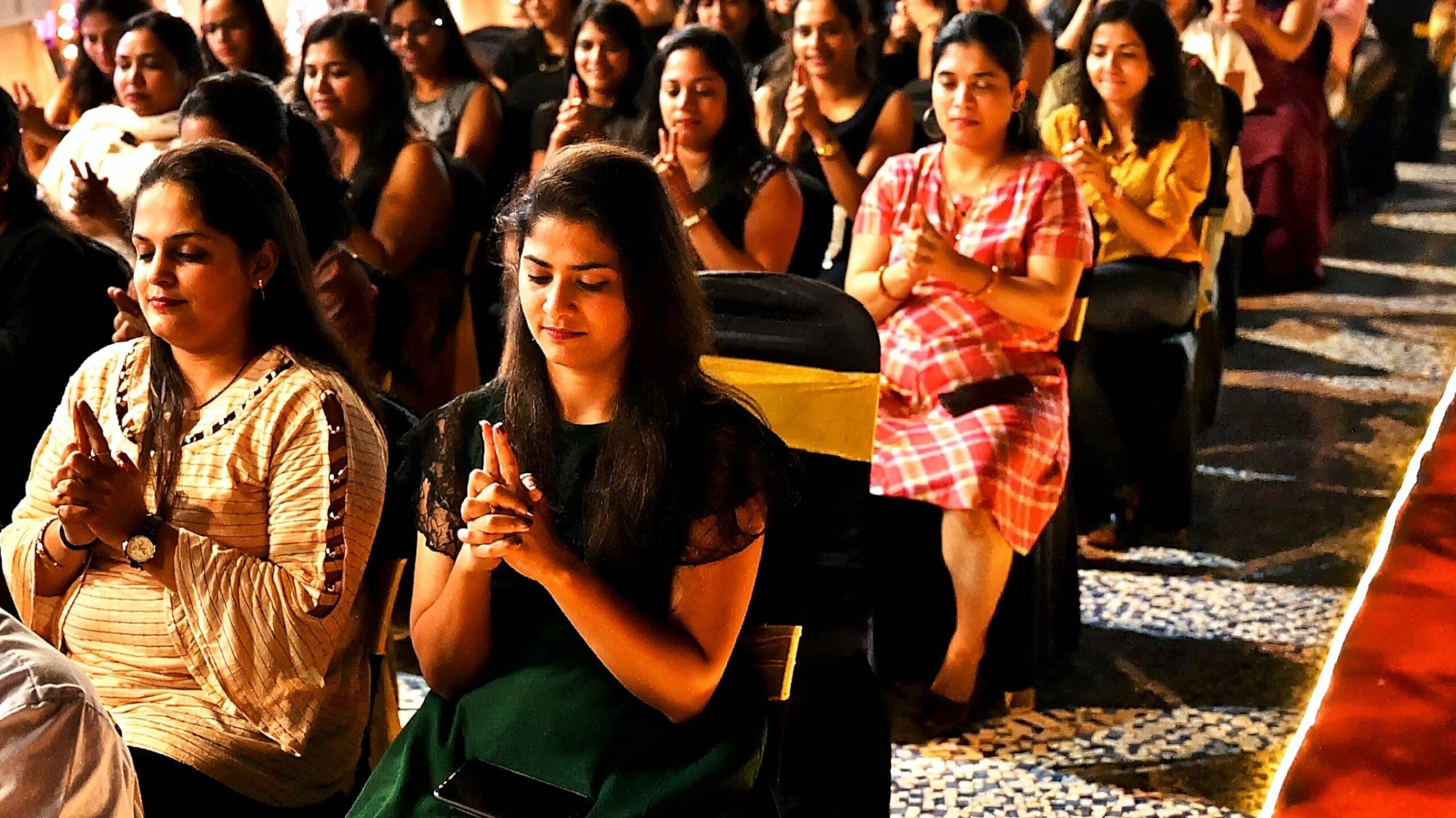
Invite a qualified facilitator to guide employees through laughter exercises, breathing techniques, and playful activities designed to reduce tension.
The first few minutes usually feel slightly awkward.
Then somebody laughs for real.
Within moments the entire room follows.
Laughter is wonderfully contagious.
🧠 Why It Works
Laughter lowers stress hormones, encourages social bonding, and quickly changes the emotional atmosphere of a room.
It also reminds employees that professionalism and enjoyment can comfortably coexist.
😊 Fun Observation
Every organisation has someone who insists they “never laugh.”
They rarely survive the session undefeated.
Activity 36: Mindfulness Reset
🎯 Objective: Improve focus and reduce mental fatigue.
👥 Best For: Any group size
⏱ Time Required: 10 to 20 minutes
💰 Budget: ₹
How It Works
A trained facilitator guides employees through:
- breathing exercises
- short meditation
- visualisation
- gentle stretching
- reflection
No previous experience is required.
🧠 Why It Works
Corporate events often overload participants with information.
A short pause allows the brain to recover, making the sessions that follow significantly more effective.
Sometimes slowing down is the fastest way to regain attention.
Activity 37: Healthy Cooking Challenge
🎯 Objective: Promote healthy habits through teamwork.
👥 Best For: 15 to 100 employees
⏱ Time Required: 60 to 90 minutes
💰 Budget: ₹₹₹
How It Works
Teams receive identical ingredients.
Their challenge is to prepare a healthy, delicious meal within a fixed budget and time limit.
A judging panel scores entries based on:
- creativity
- nutrition
- presentation
- teamwork
Bonus points if nobody mistakes salt for sugar.
🧠 Why It Works
Cooking naturally encourages communication, planning, delegation, and creativity.
It also reinforces the idea that wellbeing can be enjoyable rather than restrictive.
Activity 38: Charity Fitness Challenge
🎯 Objective: Combine wellbeing with purpose.
👥 Best For: 20 to 5,000+ employees
⏱ Time Required: One day to one month
💰 Budget: ₹₹
How It Works
Employees log:
- walking
- running
- cycling
- swimming
Every kilometre contributes towards a charitable donation sponsored by the organisation.
Departments can compete while collectively supporting a meaningful cause.
🧠 Why It Works
Purpose is one of the strongest drivers of long-term motivation.
Employees aren’t simply exercising.
They’re contributing to something bigger than themselves.
Activity 39: Interactive Mind Challenge
🎯 Objective: Stimulate curiosity, collaboration, and shared wonder.
👥 Best For: 50 to 2,000+ participants
⏱ Time Required: 20 to 45 minutes
💰 Budget: ₹₹₹
How It Works
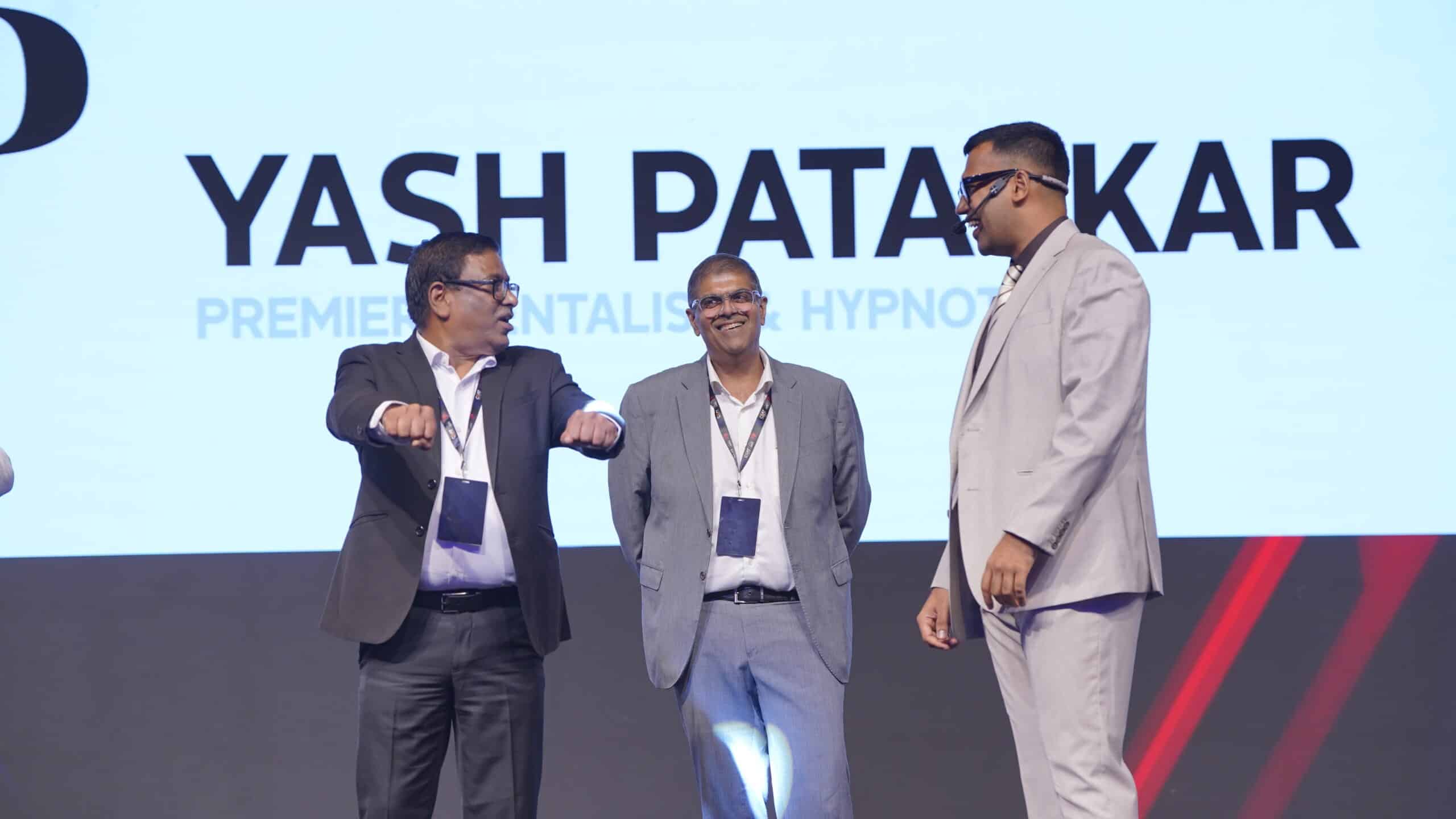
Invite a professional mentalist to lead an interactive experience centred around psychology, observation, memory, perception, and decision-making.
Rather than watching a traditional stage show, employees actively participate.
Volunteers influence outcomes.
Predictions appear impossible.
Colleagues begin questioning one another’s decisions.
Within minutes, conversations spread across the room.
🧠 Why It Works
Research consistently shows that surprise strengthens memory.
Interactive mentalism combines:
- curiosity
- audience participation
- storytelling
- laughter
- collaboration
Unlike passive entertainment, employees leave discussing the experience rather than simply remembering that it happened.
That’s exactly why psychology-based interactive entertainment has become increasingly popular during conferences, annual days, leadership summits, and employee engagement events.
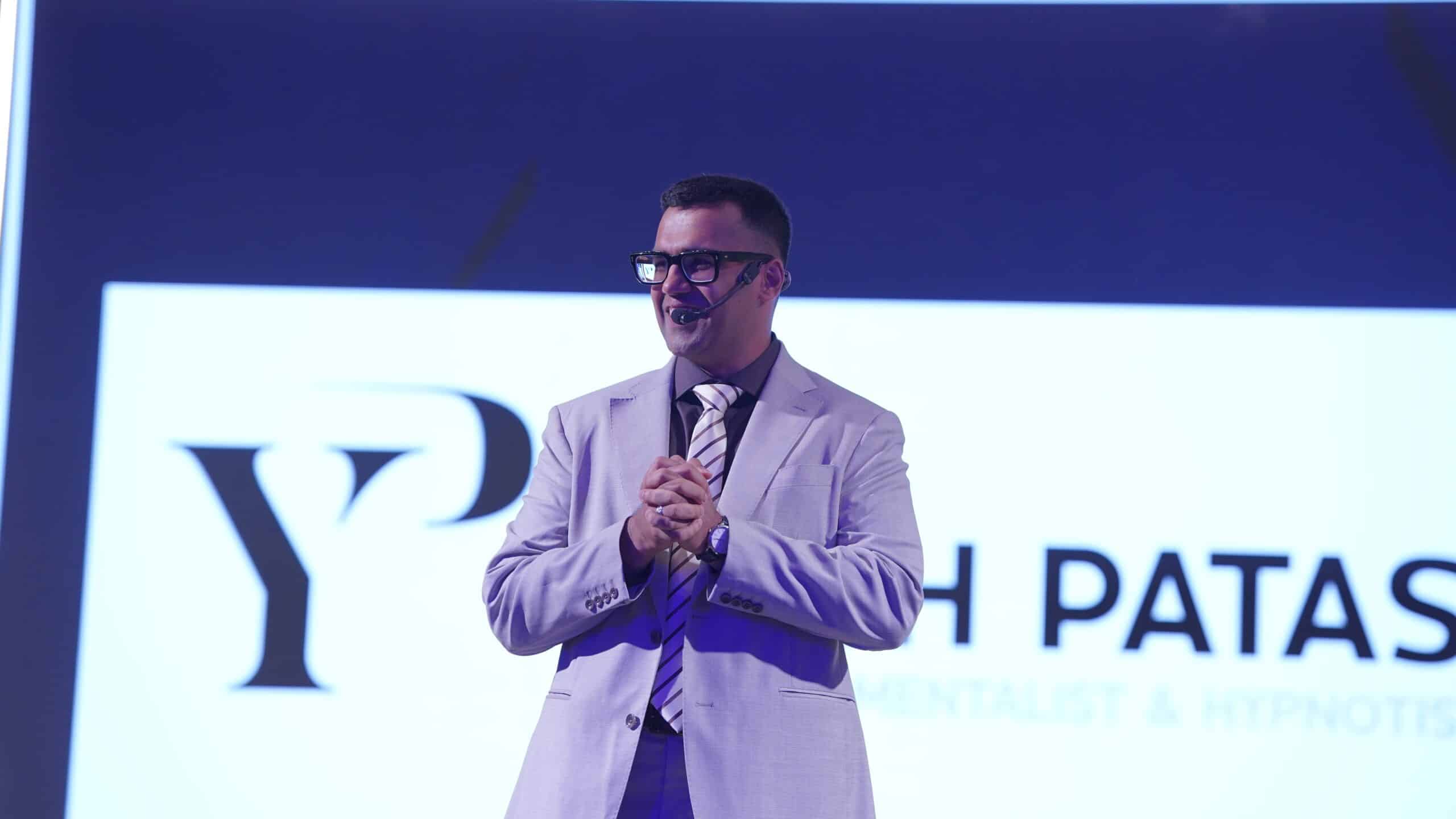
Note: Looking for interactive corporate entertainment that combines psychology, audience participation, and unforgettable moments? Explore our guide to Corporate Mentalist in India to discover how interactive mentalism transforms corporate events into shared experiences.
Activity 40: No-Meeting Afternoon
🎯 Objective: Reduce burnout and restore focus.
👥 Best For: Entire organisations
⏱ Time Required: Half a day
💰 Budget: ₹
How It Works
Dedicate one afternoon each month where no meetings are scheduled.
Employees use the time for:
- deep work
- learning
- planning
- mentoring
- creative thinking
🧠 Why It Works
One of the biggest contributors to workplace stress isn’t workload.
It’s constant interruption.
Protecting uninterrupted thinking time demonstrates that the organisation values both productivity and wellbeing.
People perform at their best when
...they feel their best!
!!
Transition to Part 3
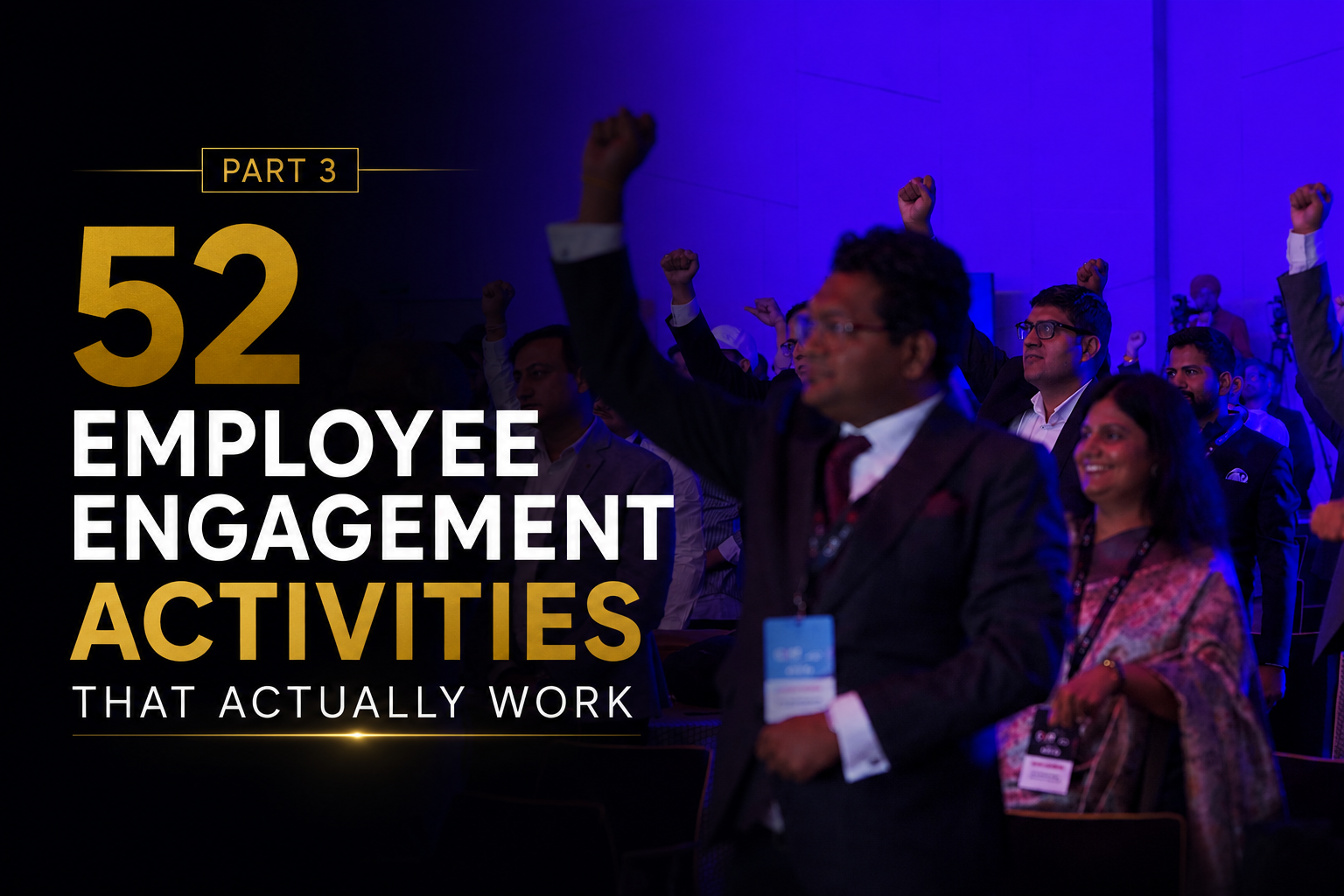
By now, we’ve explored more than forty employee engagement activities designed to strengthen communication, creativity, recognition, and wellbeing.
But what happens when your audience isn’t twenty people around a meeting table…
…it’s five hundred employees inside a convention centre?
Or two thousand delegates at an annual conference?
Large-scale events require a completely different approach.
In Part 3, we’ll explore high-impact employee engagement activities for conferences, annual days, leadership summits, product launches, and large corporate celebrations, along with practical planning frameworks, budget recommendations, and the ultimate employee engagement checklist that every HR team should keep close at hand.